Welcome to Trust-in Multispeciality Hospital, Your trusted Healthcare in Horamavu

Trust-in
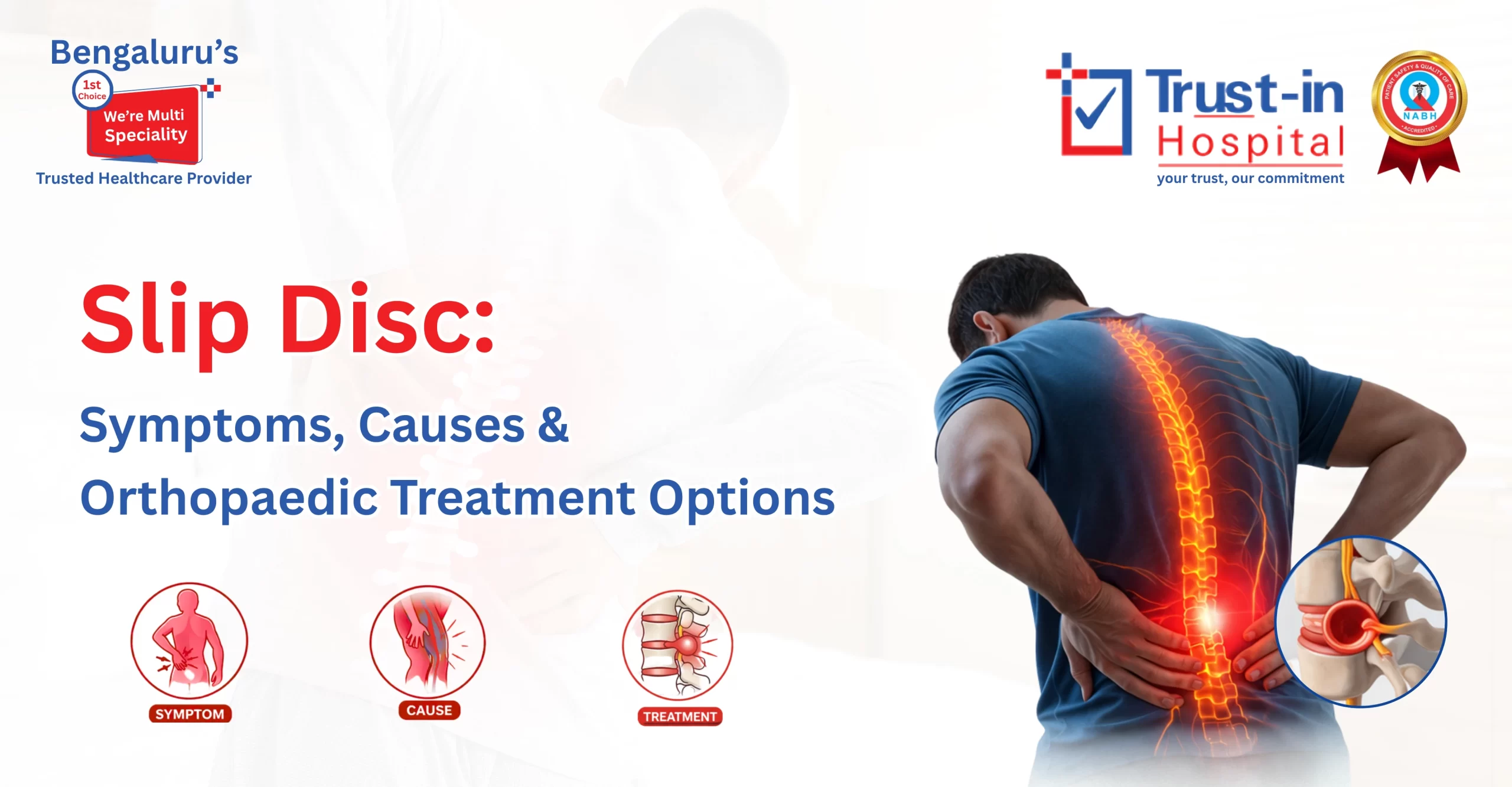
Back pain is one of the most common health complaints currently. When the pain gets to be spread in nearby parts of the body—like the arms or legs—it can be a warning side effect of a slipped disc. A slipped disc happens when one of the paddings between the spine bones slips out of place and impacts the next nerves. It can influence anybody, no matter their age, and it can make ordinary exercises such as working, moving around, or resting difficult. Understanding what a slip disc is, seeing early side impacts, and knowing the available treatment choices can offer help you see for advantageous care and expect long-term complications.
What Is a Slip Disc?
The spine is made of bones called vertebrae. Within these bones are delicate, soft structures known as plates. These plates act as strong protection and allows the spine to move without difficulty.
A slip disc happens when one of these discs moves out of its usual position or gets harmed. This can cause the delicate internal part of the plate to press on nearby nerves. When nerves are aggravated or compressed, torment and other side effects begin.
A slip disc is commonly alluded to as:
- Herniated disc
- Bulging disc
- Prolapsed disc
While the names vary, the essential issue remains the same—pressure on spinal nerves.
Where Can a Slip Circle Occur?
A slip circle can create anyplace along the spine, but it most commonly affects:
- Lower back (lumbar spine) – regularly causes leg pain
- Neck (cervical spine) – frequently causes arm or bear pain
Symptoms shift depending on the area and seriousness of nerve involvement.
Common Symptoms of a Slip Disc
Symptoms can create continuously or show up all of a sudden after damage or strain. A few individuals feel mellow distress, whereas others encounter serious pain.

Common Signs and Symptoms
- Persistent back or neck pain
- Pain that voyages to the arms, legs, or buttocks
- Tingling or deadness in hands or feet
- Muscle weakness
- Pain that declines when sitting, bowing, or lifting
- Difficulty standing or strolling for long periods
- Stiffness in the spine
In serious cases, side effects may compound rapidly and influence day by day functioning.
Warning Signs That Require Quick Medical Attention
Look for pressing healthcare if you experience:
- Sudden shortcoming in arms or legs
- Loss of bladder or bowel control
- Severe torment that does not make strides with rest
- Increasing deadness or misfortune of sensation
These may demonstrate genuine nerve compression and require quick evaluation.
Causes of Slip Disc
A slip circle, as a rule, is created due to slow wear and tear, but certain variables increase the risk.
Common Causes Include,
- Age-related changes: Plates lose adaptability over time
- Poor pose: Slumping or inaccurate sitting habits
- Improper lifting methods: Twisting from the midsection instep of knees
- Sudden damage or fall
- Repetitive strain: Overwhelming physical work or long sitting hours
- Excess body weight: Expanded weight on the spine
- Weak back and center muscles
An inactive way of life too contributes to plate problems.
Who Is at Higher Risk?
You may be more inclined to a slip circle if you:
- Sit for long hours without breaks
- Perform overwhelming manual labour
- Have a history of spinal injury
- Are overweight
- Lack standard physical activity
- Have destitute posture habits
How Is a Slip Circle Diagnosed?
Diagnosis starts with understanding your side effects and looking at spinal movement.
Diagnostic Steps Include,
- Detailed talk of torment history
- Physical examination to evaluate quality and sensation
- Imaging tests such as X-ray or MRI (in the event that needed)
An MRI makes a difference recognize the correct circle included and nerve compression.
Orthopaedic Treatment Alternatives for Slip Disc
Treatment depends on the seriousness of side effects and how much they influence every day life. Most individuals recoup well with non-surgical treatment, particularly when care starts early.
Non-Surgical Treatment Options
- Rest and Movement Modification
- Short periods of rest amid torment flare-ups
- Avoiding overwhelming lifting and sudden movements
- Gradual return to ordinary activity
Complete bed rest is not prescribed for long periods.
Medications
Orthopaedician may prescribe :
- Pain-relieving medicines
- Anti-inflammatory drugs
- Muscle relaxants (in the event that muscle fit is present)
- Medication makes a difference control side effects but is ordinarily combined with therapy.
Physiotherapy
Physiotherapy is one of the most viable medications for slip plate recovery.
Benefits include:
- Strengthening back and center muscles
- Improving adaptability and posture
- Reducing weight on the disc
- Preventing recurrence
Exercises are custom fitted to person needs and advance gradually.
Lifestyle Changes
Simple every day changes make a huge difference:
- Maintaining a solid weight
- Improving sitting posture
- Using appropriate resting positions
- Staying physically active
Consistency is key for long-term relief.
Advanced Orthopaedic Treatment Options
When pain does not move forward with orthopaedic care, progressed medications may be considered.
Injection Therapy
- Helps diminish irritation around the nerve
- Provides transitory torment relief
- Allows way better cooperation in physiotherapy
Surgical Treatment
Surgery is prescribed as it were when:
- Pain is serious and persistent
- Nerve harm is progressing
- Daily exercises are extremely limited
Modern spine surgeries are negligibly obtrusive and point to soothe nerve weight whereas protecting movement.
Treatment Options Overview
| Treatment Type | Purpose |
| Medications | Reduce pain and inflammation |
| Physiotherapy | Improve strength and mobility |
| Lifestyle changes | Prevent recurrence |
| Injections | Temporary pain relief |
| Surgery | Severe or persistent cases |
Recovery time changes depending on:
- Severity of circle damage
- Treatment approach
- Patient commitment to therapy
Most individuals progress inside weeks to months with legitimate care.
Tips to Prevent Slip Disc Problems
Prevention centers on ensuring the spine and fortifying bolster muscles.
Simple Prevention Tips
- Sit with legitimate back support
- Take breaks amid long sitting hours
- Lift objects utilizing your legs, not your back
- Stay physically active
- Strengthen center and back muscles
- Maintain a solid body weight
Living With a Slip Disc
A slip plate does not cruel lasting incapacity. With the right direction and care:
- Pain can be controlled
- Mobility can be restored
- Quality of life can improve
Regular follow-up and way of life alterations play a crucial role.
When You Should Counsel an Orthopaedic Specialist?
Consult a orthopaedic expert if:
- Pain keeps going longer than two weeks
- Symptoms decline instep of improving
- Numbness or shortcoming develops
- Daily exercises ended up difficult
Early assessment leads to way better outcomes.
Conclusion
A slip disc can be difficult and disappointing, but it is exceedingly sensible when analysed early. Most patients recover effectively with non-surgical treatment, physiotherapy, and way of life changes. Dismissing side effects or postponing care at Trust-in Hospital can lead to complications and delayed discomfort.
If back or neck pain is affecting your day-by-day schedule, looking for orthopaedic advice early can offer assistance to help you return to a dynamic and comfortable life.