Welcome to Trust-in Multispeciality Hospital, Your trusted Healthcare in Horamavu

Trust-in
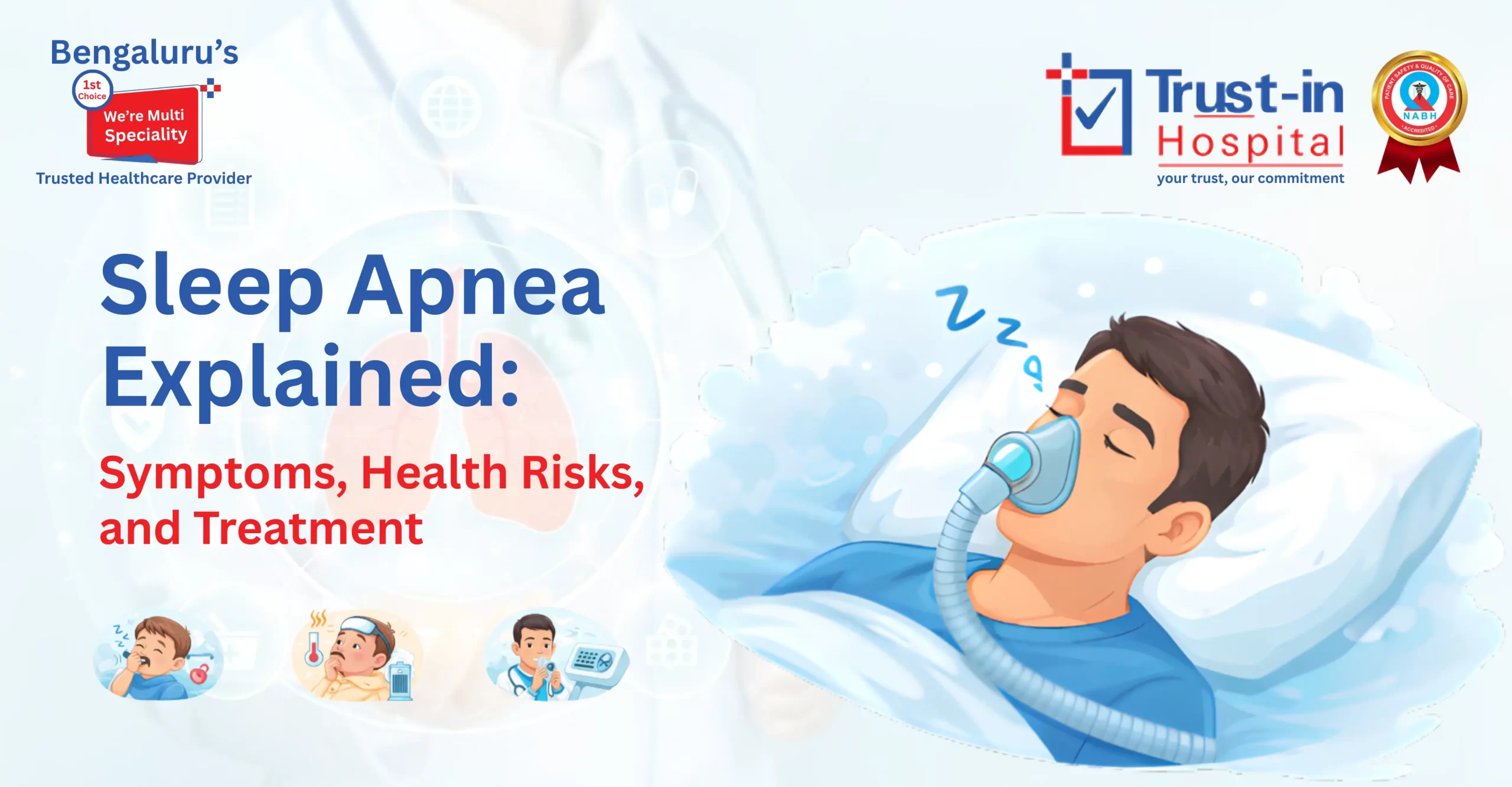
Quality sleep serves as an essential foundation for both physical health and mental health. The process of breathing, which stops and restarts during sleep disturbances, affects oxygen delivery to the body and prevents healing sleep. This condition, known as sleep apnea, regularly goes undiscovered since it happens amid rest. In any case, untreated breathing problems can lead to genuine long-term wellbeing complications.
Understanding its indications, dangers, and treatment alternatives makes a difference people look for opportune care and security in general health.
What Is Sleep apnea?
Sleep apnea is a rest clutter characterized by repeated stops in breathing amid sleep. These intrusions may last from a few seconds to over a minute and can happen different times per hour.
There are three fundamental types:
| Type | Description |
| Obstructive Sleep Apnea (OSA) | Caused by aviation route blockage amid sleep |
| Central Sleep Apnea (CSA) | The brain comes up short to send appropriate breathing signals |
| Complex Sleep Apnea | Combination of obstructive and central types |
Obstructive rest apnea is the most common disorder.
What Causes Sleep apnea?
The causes change depending on the type.
Obstructive snores Causes:
- Relaxed throat muscles amid sleep
- Obesity
- Enlarged tonsils
- Narrow aviation route structure
- Chronic nasal congestion
Central sleep disorders Causes:
- Neurological disorders
- Heart conditions
- Stroke
- Use of certain medications
Risk increments with age, weight pickup, and family history.
Common Side effects
Symptoms may be taken note of by the understanding partner or a bed partner.
- Loud, incessant snoring
- Episodes of ceased breathing amid sleep
- Gasping or choking at night
- Excessive daytime sleepiness
- Morning headaches
- Difficulty concentrating
- Irritability
- Dry mouth upon waking
Because numerous side effects happen at night, recovery is frequently delayed.
Health Dangers of Untreated Sleep Apnea
Sleep apnea is more than just disturbed rest. Rehashed oxygen hardship can strain crucial organs.
| Health Risk | Impact |
| High blood pressure | Increased cardiovascular strain |
| Stroke | Increased cerebrovascular risk |
| Type 2 diabetes | Poor glucose regulation |
| Depression | Mood disturbances |
| Daytime fatigue | Increased mishap risk |
Long-term untreated cases can have an absolute effect on life expectancy.
How Is Sleep Apnea Diagnosed?
Diagnosis regularly involves:
- Medical history review
- Physical examination
- Sleep consider (polysomnography)
- Home rest testing (in a few cases)
Around the wrist, a bracelet or a watch is capable of keeping track of one’s screen time, breaths, oxygen levels, heartbeat, or brain movements while sleeping.
Treatment Options
Treatment depends on seriousness and basic cause.
- Way of life Modifications
Mild cases may make strides with:
- Weight loss
- Regular exercise
- Sleeping on the side
- Avoiding liquor some time recently bedtime
- Quitting smoking
Lifestyle changes can altogether diminish aviation route obstruction.
- Ceaseless Positive Aviation route Weight (CPAP)
Continuous positive airway pressure treatment is the most common treatment for direct to extreme obstructive sleeping disorders. The gadget conveys consistent disc weight through a cover to keep the aviation route open amid sleep.
Benefits include:
- Reduced snoring
- Improved oxygen levels
- Better rest quality
- Reduced cardiovascular risk
- Verbal Appliances
Custom-made dental gadgets reposition the jaw and tongue to anticipate aviation route collapse. These are reasonable for gentle to direct cases.
- Surgical Options
Surgery may be prescribed if basic variations from the norm cause obstacles. Methods may involve:
- Removing overabundance throat tissue
- Correcting nasal blockages
- Jaw repositioning
Surgical mediation is considered when preservationist medicines fail.
Managing sleep disorders Long-Term
Consistency is fundamental for effective treatment. Patients should:
- Use CPAP gadgets routinely if prescribed
- Attend follow-up rest evaluations
- Monitor weight changes
- Maintain heart-healthy habits
- Avoid narcotic drugs unless prescribed
Regular audits guarantee ideal side effect control.

When to Look for Restorative Attention
Consult a healthcare supplier if you experience:
- Loud, tireless snoring
- Excessive daytime sleepiness
- Frequent night time awakenings
- Morning headaches
- Observed breathing delays amid sleep
Early determination avoids genuine complications.
Emotional and Way of life Impact
Chronic rest disturbance influences disposition, efficiency, and connections. Treating the condition regularly progresses vitality levels, cognitive clarity, and enthusiastic solidness. Numerous patients report feeling altogether more calm and focused once breathing unsettling influences are controlled. Adequate rest is crucial to long-term health.
Frequently Asked Questions (FAQs)
- Is wheezing continuously a sign of sleep apnea?
Not continuously, but boisterous, tireless wheezing combined with breathing delays ought to be evaluated.
- Can children create sleep apnea?
Yes, frequently due to extended tonsils or obesity.
- Is CPAP uncomfortable?
Modern gadgets are movable, and most patients adjust over time.
- Can sleep apnea go absent on its own?
Mild cases may move forward with weight misfortune, but direct to extreme cases as a rule require treatment.
- Does sleep apnea influence heart health?
Yes. Untreated cases altogether increment cardiovascular risk.
Conclusion
Sleep apnea exists as an actual sleep disorder which causes breathing problems during sleep but exists as a condition that can be treated. The condition left untreated will lead to increased risks of both heart disease and stroke and metabolic disorders. Trust-In Hospital provides complete sleep disorder assessment and treatment services which include advanced sleep studies and expert consultations and customized treatment plans and CPAP therapy assistance and continuous patient monitoring to improve sleep quality and health outcomes.
If symptoms are displayed, looking for opportune assessment can ensure both short-term well-being and long-term well-being results.